|
|
|
How do I build Cheap & Efficient?
Last Post 07 Sep 2015 11:41 PM by UREdogLady. 44 Replies. |
Sort:
|
|
 Prev Next Prev Next |
You are not authorized to post a reply. |
|
fpbros

New Member

Posts:17
 |
| 13 Jul 2015 07:11 PM |
|
This is a really cool forum. Hope I can get some practical tips for a fairly unskilled noob.
I say fairly unskilled b/c I had a spinal injury with some residual problems that hinders my DIY abilities. I do have some friends and family who will help us on our first build though. We want to do DIY as much as possible, but my leaning on them is a factor, so I'm looking into methods that can get dried in quickly. Here's what I've considered so far with #4 being the least researched, but it might be my best option cost wise (see if you agree).
We want to build a very simple, no frills ranch with full basement. 1000 sqft. both floors (current sketch is 40 x 25) with 10 x 25 enclosed front porch. The only "special" feature is possibly two extra concrete walls for the basement master bedroom b/c I need it to be as sound proof as possible. We'd like to have concrete floors if cost effective which would make it a great storm shelter too.
1. ICF: I've gotten info from a guy who's built three himself, says he's done it for less than $40 sq. ft. total DIY, but he has skills that neither I or my friends have which leaves me subbing more.
2. Steel SIP: I've talked to Kokoon Homes, love 'em! Just don't know if I can keep my costs down enough with that. Don't have any info from anyone else.
3. Budget Kit Homes: I don't know if it's that much of a bargain per sqft. unless you go with their biggest packages, and since which is way more than we want.
4. Standard Steel Building: Since we'd like a large garage, this would probably be our best deal $$$ wise I'm guessing. Companies usually include delivery and set-up, and we're not hung up much on aesthetics. I've seen some look just fine since they normally offer some pretty residential looking color, trim etc. I think we could just do one big building, garage included. I just don't have any contacts on this type yet. Can you still get good R value and fairly quite? If so, I'm probably sold.
Any comments welcome. Thanks! |
|
|
|
|
|
|
Dana1

Senior Member
Posts:6991
|
| 14 Jul 2015 04:19 PM |
|
SIPs & ICFs aren't usually cheap. Steel usually isn't either.
Modular & mobile homes are often cheap, but not often efficient, but don't rule it out.
Dirt and hay bales are cheap, but not always appropriate for the climate.
CMU (concrete masonry units/blocks) are cheaper than poured concrete for making nearly silent rooms, and are fairly DIY-friendly.
Slab on grade is a lot cheaper than full basement. What do you need/want the basement for?
Simple rectangles are more efficient than footprints with ells tees, and bump-outs, due to less exterior surface area per square foot of floor area.
Where are you located?
What are your heating fuel options?
What are your thermal performance goals?
Do your friends work for free, or do you have to keep feeding them beer at regular intervals? :-) |
|
|
|
|
fpbros
New Member
Posts:17
|
| 15 Jul 2015 04:39 AM |
|
I was advised that basement was wiser when it comes to plumbing (running more vertical vs. long horizontal). Plus I thought it'd be difficult to get the master bedroom as quiet as a basement. We'll have livestock guardian dogs that bark loudly as a part of their duty. I'm open to the idea of slab. I just don't know anything about sound-proofing on grade. With Budget Kit Homes you get down to pretty low sq.ft. cost if you build all one level. Some of their bigger packages get down to about $14/sq.ft. for all stud walls interior and exterior, trusses, roofing and siding. It's a total DIY system, and I like the idea of never replacing any rotted wood, no pest issues etc. Are you familiar with these? http://www.budgethomekits.com/plans . What do you think? Isn't pretty cheap still to have basic CMU done even by a builder? Do you know about what it costs, unfinished of course. I'm in middle TN. Heating fuel options: Besides electric, I think just propane if I invested in a tank etc. of course, which I have no idea of that cost. Thermal performance goals: I think you mean R value? From what I gather anything about 20+ should be pretty efficient where we build. In the South and pretty heavily wooded. We won't get much straight wind. Friends work for free in the sense that I'll be helping them on their projects with labor and/or supplies (no beer requested thankfully which will make things go faster  . This is another reason I like steel kits the most is because it's all precut as opposed to lumber which is too much labor for me not to have to hire framers. Pre-punched, precut everything would most likely leave me hiring out only drywall. That would have to be major savings, no? That's the one downside I see with the large standard steel building guys. I can't find any of them that can offer complete precut packages including interior. So that leaves me needing interior framing subbed out. If you know any others with precut framing options, please let me know. Thanks for the input... looking forward to more of your thoughts! |
|
|
|
|
fpbros
New Member
Posts:17
|
| 15 Jul 2015 04:39 AM |
|
I was advised that basement was wiser when it comes to plumbing (running more vertical vs. long horizontal). Plus I thought it'd be difficult to get the master bedroom as quiet as a basement. We'll have livestock guardian dogs that bark loudly as a part of their duty. I'm open to the idea of slab. I just don't know anything about sound-proofing on grade. With Budget Kit Homes you get down to pretty low sq.ft. cost if you build all one level. Some of their bigger packages get down to about $14/sq.ft. for all stud walls interior and exterior, trusses, roofing and siding. It's a total DIY system, and I like the idea of never replacing any rotted wood, no pest issues etc. Are you familiar with these? http://www.budgethomekits.com/plans . What do you think? Isn't pretty cheap still to have basic CMU done even by a builder? Do you know about what it costs, unfinished of course. I'm in middle TN. Heating fuel options: Besides electric, I think just propane if I invested in a tank etc. of course, which I have no idea of that cost. Thermal performance goals: I think you mean R value? From what I gather anything about 20+ should be pretty efficient where we build. In the South and pretty heavily wooded. We won't get much straight wind. Friends work for free in the sense that I'll be helping them on their projects with labor and/or supplies (no beer requested thankfully which will make things go faster . This is another reason I like steel kits the most is because it's all precut as opposed to lumber which is too much labor for me not to have to hire framers. Pre-punched, precut everything would most likely leave me hiring out only drywall. That would have to be major savings, no? That's the one downside I see with the large standard steel building guys. I can't find any of them that can offer complete precut packages including interior. So that leaves me needing interior framing subbed out. If you know any others with precut framing options, please let me know. Thanks for the input... looking forward to more of your thoughts! |
|
|
|
|
fpbros
New Member
Posts:17
|
| 15 Jul 2015 04:43 AM |
|
I was advised that basement was wiser when it comes to plumbing (running more vertical vs. long horizontal). Plus I thought it'd be difficult to get the master bedroom as quiet as a basement. We'll have livestock guardian dogs that bark loudly as a part of their duty. I'm open to the idea of slab. I just don't know anything about sound-proofing on grade. With Budget Kit Homes you get down to pretty low sq.ft. cost if you build all one level. Some of their bigger packages get down to about $14/sq.ft. for all stud walls interior and exterior, trusses, roofing and siding. It's a total DIY system, and I like the idea of never replacing any rotted wood, no pest issues etc. Are you familiar with these? http://www.budgethomekits.com/plans . What do you think? Isn't pretty cheap still to have basic CMU done even by a builder? Do you know about what it costs, unfinished of course. I'm in middle TN. Heating fuel options: Besides electric, I think just propane if I invested in a tank etc. of course, which I have no idea of that cost. Thermal performance goals: I think you mean R value? From what I gather anything about 20+ should be pretty efficient where we build. In the South and pretty heavily wooded. We won't get much straight wind. Friends work for free in the sense that I'll be helping them on their projects with labor and/or supplies (no beer requested thankfully which will make things go faster . This is another reason I like steel kits the most is because it's all precut as opposed to lumber which is too much labor for me not to have to hire framers. Pre-punched, precut everything would most likely leave me hiring out only drywall. That would have to be major savings, no? That's the one downside I see with the large standard steel building guys. I can't find any of them that can offer complete precut packages including interior. So that leaves me needing interior framing subbed out. If you know any others with precut framing options, please let me know. Thanks for the input... looking forward to more of your thoughts! |
|
|
|
|
fpbros
New Member
Posts:17
|
| 15 Jul 2015 04:48 AM |
|
Man! Sorry about the dup'd replies. I didn't think it was loading, but it was just moving slow, and I must've hit it several times. BTW I know a good IT guy that might be able to help with a solution if the administrator would like to contact me. There is a server issue with this, and it's also causing a problem with the search function. |
|
|
|
|
Dana1
Senior Member
Posts:6991
|
| 15 Jul 2015 11:52 AM |
|
Posted By fpbros on 15 Jul 2015 04:39 AM
I was advised that basement was wiser when it comes to plumbing (running more vertical vs. long horizontal). Plus I thought it'd be difficult to get the master bedroom as quiet as a basement. We'll have livestock guardian dogs that bark loudly as a part of their duty. I'm open to the idea of slab. I just don't know anything about sound-proofing on grade.
With Budget Kit Homes you get down to pretty low sq.ft. cost if you build all one level. Some of their bigger packages get down to about $14/sq.ft. for all stud walls interior and exterior, trusses, roofing and siding. It's a total DIY system, and I like the idea of never replacing any rotted wood, no pest issues etc. Are you familiar with these? http://www.budgethomekits.com/plans . What do you think?
Isn't pretty cheap still to have basic CMU done even by a builder? Do you know about what it costs, unfinished of course. I'm in middle TN.
Heating fuel options: Besides electric, I think just propane if I invested in a tank etc. of course, which I have no idea of that cost.
Thermal performance goals: I think you mean R value? From what I gather anything about 20+ should be pretty efficient where we build. In the South and pretty heavily wooded. We won't get much straight wind.
Friends work for free in the sense that I'll be helping them on their projects with labor and/or supplies (no beer requested thankfully which will make things go faster . This is another reason I like steel kits the most is because it's all precut as opposed to lumber which is too much labor for me not to have to hire framers. Pre-punched, precut everything would most likely leave me hiring out only drywall. That would have to be major savings, no? That's the one downside I see with the large standard steel building guys. I can't find any of them that can offer complete precut packages including interior. So that leaves me needing interior framing subbed out. If you know any others with precut framing options, please let me know.
Thanks for the input... looking forward to more of your thoughts!
You still don't say where you are located (though you hint that it's in the south) and what makes sense differs radically from say, Key West FL vs. Paducah KY vs. Presque Isle ME. Can you at least specify your DOE climate zone? 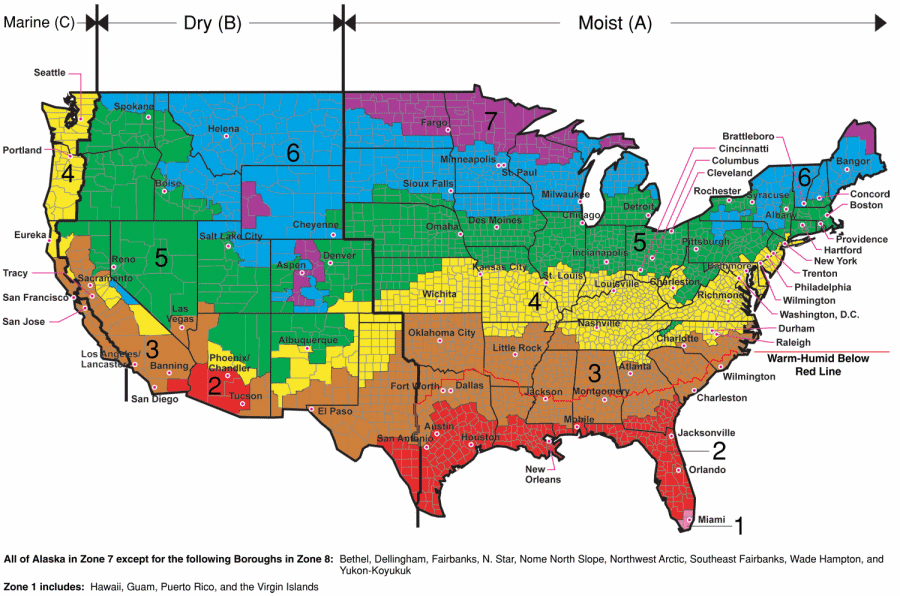 Thermal performance isn't necessarily about R-value, though R value affects thermal performance. Some people have goals related to energy costs per year, others are looking at average radiant temperature at the 1% and 99% outside design temps, still others are looking at achieving Net Zero Energy using rooftop solar etc. Without a hint as to what's important to you from a thermal performance perspective there's no good place to start. Propane and electricity prices vary, but there are very few places where space heating with propane is cheaper than heating with heat pumps, and there is NO place where heating with resistance heating is cheaper than with heat pumps. The typical heat load of even a code-min 1000' house with an insulated 1000' basement in climate zones 2A & 3A is going to be well under 15,000 BTU/hr and could easily be under 10,000 BTU/hr, and most conventional heating/cooling systems will be oversized for that. A modulating 1-ton or even a 3/4 ducted mini-split heat pump to handle both cooling and heating is likely to be a more appropriate solution than a propane furnace with a conventional split system AC. An insulated conditioned crawlspace with a rat-slab (insulated or not, depending on location, code minimums, & performance goals) for running the plumbing & ducts is cheaper than a full basement, but you don't get the storage space that you get with a basement. With the ducts fully inside the conditioned space (such as a basement or crawl) and NOT in a hot attic above code-min or better attic-R, peak cooling loads are determined by window size & orientation, and shading factors. A design with roof overhangs on the south side to limit summertime mid-day solar gain, and NO windows on the west side to eliminate the late-hour gains from low-angle sun after the house has been sun-drenched all day is recommended. With some forethought on windows & site orientation you can easily get the cooling load of a 1000' house under 1-ton, or even under 3/4 ton without going more than IRC 2012 code-min on R-values or window U-factors. Old schoolers still seem to like to ues "a-ton per 500 feet", but that would be the cooling load of a tar paper shack with single-pane windows, not an IRC 2012 code-min house. With more detail about your goals & location, your local propane pricing and electricity rates I can get into the weeds on it a bit more. |
|
|
|
|
fpbros
New Member
Posts:17
|
| 16 Jul 2015 04:25 AM |
|
Ok I'm learning here. That's a good thing! I did say in my last post, I'm in middle TN, so I guess I'm in region number 4. I'll say this, I'm just not near prioritizing thermal value etc. as much as I need to focus on the budget of the build itself. You got me leaning back to slab b/c of practical cost mostly, and also gives us more DIY latitude. If I get a basement, I need to contract at least the build itself, but if I can get so much of the build pre-engineered like the steel kits, I might not need to contract much more than drywall. That's basically b/c I can't do it, and nobody I know wants to (can't blame em), and I think I can get it done fast and cheap. Efficiency wise, I just want to make sure it's decent. In other words, don't think ONLY build cheap / DIY friendly and then live in an energy hog.
That being said, that steel kit seller has a proprietary system especially designed for slab foundation. Would you mind taking a look at them, and giving me your take? I'm thinking I would go for one of their bigger sale models like the "Texan", and turn one end into a garage since I don't want all that finished living area (like 20-25 deep) or get a smaller model and get a matching metal garage later with cash saved. What do you think? What do you think you could finish one of these out for, mostly DIY, also using some reclaimed or homemade stuff for finishing if possible, cabinets etc. http://www.budgethomekits.com/plans |
|
|
|
|
Dana1
Senior Member
Posts:6991
|
| 16 Jul 2015 01:58 PM |
|
The title of this thread was "How do I build Cheap & Efficient", not "How do I build for really really cheap."
Code minimum R for zone 4 is 2x6/R20 or 2x4/R13 + R5 of continuous insulating sheathing walls, and R49 attic, and R10 continuous to 2' depth at the slab edge for slab-on-grade foundations, or R10 continuous for full-basement walls & crawl spaces.
The budgethomekits.com steel house kits use metal 2x4 secondary framing and only "radiant barrier" for insulation (next to worthless in your climate, except in otherwise uninsualted buildings). You'd have buy insulation over & above what comes with the kit to improve it's thermal performance to make it comfortable, and it will take MORE insulation applied differently than a wood framed house to get it anywhere near code-min performance. The high conductivity of steel in the framing is orders of magnitude higher than wood framing. eg:
A typical 2x4 /R13 wood framed house with wood sheathing, vinyl siding and 1/2" gypsum wallboard comes in at about R10 "whole wall" (a U-factor of U0.10 BTU/hr per square foot per degree-F of temperature difference), after factoring in the thermal bridging.
A steel building with radiant barrier sheathing with R13 between steel studs and 1/2' wallboard comes in at about R6, or U0.17 after thermal bridging.
A code min wall for zone 4 has a U-factor of U-0.057 (if done on a calculated U-factor basis, rather than code prescriptive R values in wood framing.)
That means the heat loss of the walls will be 70% higher that of that sub-code 2x4 /R13 wood framed house, and ~3x of the wall losses of a code min house. (U0.057 is about 1/3 of U0.17).
If you live in a location that doesn't have codes it might be legal to build that house, but it's the opposite of efficient. One way to get to code min is to add 2.5-3" of rigid EPS foam between the studs and the wall board as well as R13 batts between the steel studs, at a cost of $1.00-$1.25 per square foot of wall area.
And that's just to get to code-min.
A relatively cheap, rugged & quiet build:
A slab on grade CMU "mass wall" house with 2" of EPS on the that extended 2 feet below grade would meet code min, and would have most of the benefits of an ICF without the cost. You could build a non-structural 2x3 wall on the interior to hang the wallboard & route the electricity, etc. and drop in R7-R8 "econo-batts" (unfaced or kraft faced, but not foil), and that would beat code. You could also do non-structural framing with 2x4/R13s and still meet code, but it would lose some of the thermal mass benefits, and would not be appreciably more efficient than the 2x3 wall- you'd be better off spending it on another half-inch of exterior foam.
The CMU would can be air sealed on the exterior with a sprayed-on weatherproofing prior to installing the EPS. The EPS can either be cap-screwed to the CMU and be finished with purpose made stucco-like material rather than spending the money on siding, or you can install some 1x4 (not narrower than 3.5" or it'll split) furring through-screwed to the CMU with masonry screws which would allow you to install most types of siding to the furring (heavier types of siding may take ring-shank nails due to having only 3/4" of wood for retention.)
Whatever you eventually build, AIR SEALING the exterior shell prior to insulating is a cheap and important efficiency measure, as is keeping all of the heating & cooling distribution plumbing/ducts inside the insulation, even if that means building the wall a foot taller to hang the ceiling gypsum a foot below the structural trusses or joists to provide a ducts & power routing chase.
Installing 1-2" of EPS under the slab is a good idea in that type of build, but you can skip it as long as you've met code by running the exterior foam down at least a couple feet below grade. If yours is a termite prone area, encapsulating the exterior foam with something like QuiKrete Foam coating stucco-like finish all the way down to the bottom of the foam will limit the ability of insects to use the EPS as a super-highway tunneling system, and using copper or copper coated sill gasket for the window flashing also helps.
|
|
|
|
|
fpbros
New Member
Posts:17
|
| 16 Jul 2015 06:48 PM |
|
Thanks for the excellent details. Well now that I'm more narrowed down to the building type, I could revise my thread title, haha. Meaning, I think the budget steel kit is by far in the lead simply based on the diy aspect. I don't have the help I need to do block or some others that are not nearly as comprehensive material and simplicity wise. I'm open to shopping other comparable kits, but I haven't found anything that includes so much.
That being said, I probably just need to get the insulation and foundation strategy dialed in. I can say this for sure. I've verified that my area is 2012 International Building Code. I knew I would need to add insulation if I used the BH kit, but that's a lot easier than using a kit that comes with no trusses, roofing, siding, interior wall framing. I'll pick insulation any day over that. This touts high R value, and pretty cost effective too: http://insulation.owenscorning.com/homeowners/renovation/products/atticat-expanding-blown-in-insulation-system/ . Could we just use this behind the radiant barrier and not need sheets, batt etc.? It claims to be non-toxic and can acheive R30 walls and higher for attic. What do you think? |
|
|
|
|
smartwall

Veteran Member
Posts:1209
|
| 17 Jul 2015 09:48 AM |
|
Can't do it with that equipment. For walls you need a gas powered blowing machine or a really high powered electric that runs on 220 volt current, not the plug in an outlet machine. Plus the OC blowing wool in not as refined as Insul-Safe or the JM product |
|
|
|
|
toddm
Veteran Member
Posts:1152
|
| 18 Jul 2015 02:45 PM |
|
Plumbing and wiring a slab on grade house doesn't have to be difficult if your plan anticipates it. I used four chases (dropped ceilings) in mine to get it plumbed and wired with just one slab penetration (to the kitchen island.) Nothing looks weird; kitchen cabinets, pantries and shower stalls are usually 7' rather than 8'. Your design can also simplify things by efficient placement of baths and kitchen. If you have baths on opposite corners of the house, you'll have long runs regardless of basement or no basement. The one thing you do give up with slab on grade is storage. More reason to plan ahead.
Also look at advanced framing techniques. Google OVE framing. By reducing the number of studs in walls you save money later as well as now because there is less thermal bridging. Also google California corner.
Salvage is both cheap and green. Make lumber of the trees you have to cut down, look for a demolition project or both.
I like dana's idea of CMU sheathed in foam board. But laying block is an art you're not likely to master in building a single house, assuming no experience. If your friends lack experience as well, offer to mix mud and stock blocks in exchange for watching how the pros do it and getting to ask questions. I hired a moonlighting mason and served as his tender.
|
|
|
|
|
fpbros
New Member
Posts:17
|
| 18 Jul 2015 04:55 PM |
|
Thanks for the encouraging post about the slab especially. I've always liked basements, but this project is practicality over preference. My planning will be as conducive to slab as can be if I end up going the Budget Home Kits route. Their kits are designed with a proprietary system specifically for building on slab. It's all steel framing, precut, pre-punched chases for plumbing and electrical designed entirely for DIY. I like the idea of others, ICF, CMU, SIP, but so far I can't see anything that reduces man hours, subs, and minimizes risk like these. As you said, block wouldn't be mastered in one project, and it's just not realistic for other reasons I stated anyway (for me at this point). I'm told it's R16-17 walls total with their normal approach using radiant barrier and thermal break steel 2x4. If you'd like to have a look at the site, and share your thoughts, I'd appreciate it! http://www.budgethomekits.com/ |
|
|
|
|
arkie6
Veteran Member
Posts:1453
|
| 18 Jul 2015 06:20 PM |
|
Posted By fpbros on 18 Jul 2015 04:55 PM
...I'm told it's R16-17 walls total with their normal approach using radiant barrier and thermal break steel 2x4.
I'm not seeing any details to support that claim.  |
|
|
|
|
fpbros
New Member
Posts:17
|
| 18 Jul 2015 07:11 PM |
|
Those details aren't on the site... got it from speaking to one of the reps. |
|
|
|
|
arkie6
Veteran Member
Posts:1453
|
| 18 Jul 2015 10:18 PM |
|
Framing your home with pre-cut wood studs and manufactured roof trusses is probably just as easy as assembling that metal structure. And it would cost less. And it would have better thermal performance. If you are uncomfortable with wood framing, buy some books, watch some youtube videos, and spend a couple days watching an experienced framing crew build a house. |
|
|
|
|
fpbros
New Member
Posts:17
|
| 18 Jul 2015 11:44 PM |
|
Can you recommend a wood kit source that's comparable to these? These kits include more than any I've seen at $14.55 / sq.ft. for the biggest models. I don't want that much finished living area, so I'm considering using 20 ft. of one end for garage / storage, which leaves 64 x 33 floor plan to cover what we need. I was considering a wood panelized kit at one time that was pretty complete, but the company's out of business now. If you have any suggestions, please let me know. Thanks! |
|
|
|
|
arkie6
Veteran Member
Posts:1453
|
| 19 Jul 2015 10:33 AM |
|
Why would you need a kit? Just take your plans to the local lumberyard and they will figure up a bill of materials and have them delivered to your work site. Assuming you have standard height walls of 8' or 9', the studs will come pre-cut to the proper length for 1 bottom plate and 2 top plates. You will have to cut the plates to length to match your wall length. Also, you will have to cut and assemble headers over your windows and doors.
Take your plans to a local wood truss manufacturer, and they will build them and deliver them. If your trusses are very large, you will likely need to rent the services of a boom truck and operator for half a day to set them (that cost me ~$400). |
|
|
|
|
toddm
Veteran Member
Posts:1152
|
| 19 Jul 2015 10:39 AM |
|
A radiant barrier without an air gap to reflect into does nothing, so you need to ask your sales rep how they get R17 if it's simply sandwiched between steel siding and steel studs. And empty stud bays won't be an answer your building inspector accepts. Radiant claims have been much abused. Google 'radiant FTC.'
Kit houses have been around forever. I grew up in one built in 1910. There has been a new crop of them as folks like you look at DIY. A surprising number are steel, which has been expensive until the Chinese economy hiccuped recently. Steel studs have been 10 - 20 percent more expensive than wood. I'd wait if you are truly interested. I suspect that shipping costs favor steel; a 25 ga. stud weighs almost nothing.
Anyhoo, you want a kit builder near you. (or prefab which can often be bought bare for DIY finishout.) 84 lumber offers a few kit models IIRC. A quick google of Tenn kit homes turns up logs mainly. Probably isn't much cost savings in stud wall vs local lumber suppliers, who have very sharp pencils in most markets. |
|
|
|
|
fpbros
New Member
Posts:17
|
| 20 Jul 2015 04:02 AM |
|
The radiant barrier is just the wrap at about R3-4, then thermal break between studs is R13-14.
Thanks for the tip on 84 Lumber. I checked into them. They seem to run about ten bucks more / sq. ft. than Budget, but they include, exterior doors, drywall / trim, insulation, cabinets and countertops, and even some vanities (which would be limited the original floor plan number of baths I assume). In my situation, I have to lean heavily on my free help friends because of my disability, and none of them are experienced in framing or very little. I have some who have some good skills in general though. The lumber route, with more laborious framing, greater error margins plus standard shingle roof and vinyl siding, which isn't as fast as easy as steel, would necessitate more sub's. Not only that, we will be in a heavily wooded site, which means I have to factor in lifelong pest control expense that I don't have with steel as well as mold, rot issues, but not with steel either. We have access to a huge construction reclamation warehouse that should get us close to, if not all cabinets, doors, countertops etc. I'm just not seeing a stick version that seems to best the Budget Home route yet, but I will be doing detailed cost analysis.
Also, you mentioned prefab packages available for DIY finish. I haven't been able to find one. They all seem about as expensive as contractor built homes. Do you have any specific names? Thanks!
|
|
|
|
|
| You are not authorized to post a reply. |
|
Active Forums 4.1
 |
Membership: |
 |
Latest:
croccohvacusa |
 |
New Today:
0 |
 |
New Yesterday:
0 |
 |
Overall:
35027 |
 |
People Online: |
 |
Visitors:
243 |
 |
Members:
0 |
 |
Total:
243 |
|
|
|