davisnate

New Member

Posts:4
 |
| 13 Feb 2021 12:28 AM |
|
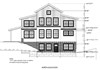
We are building a basement plus two story in the mountains of Colorado. The footprint is nearly square, 46' on each side. I plan to do ICF for the basement. Should I go up another floor or two with ICF? Should I go all the way to the gable peak? What are the advantages and disadvantages? As a DIY (with quite a bit of construction experience), would it be too challenging? What manufacturer would work best for going multiple floors? Thanks so much for the help. |
|
|
|
|
|
|
smartwall

Veteran Member
Posts:1209
|
| 13 Feb 2021 02:33 PM |
|
Once you've done the basement you know what the deal is with building with icfs. It would be a shame to stop there. Level, plumb and square are your guides. I'm in the business, but I would never build another house without using icfs. It's about as monolithic as you can get. As far as the gable I would only do it if it was going to be part of the living area. If it's not, then frame. Since most blocks perform the same I would choose one with a good distributor base as well as a close manufacturer since shipping affects the cost. Buildblock has a molder in Colorado Springs so contact them. They have a lot of videos and how to info. |
|
|
|
|
davisnate
New Member
Posts:4
|
| 13 Feb 2021 03:28 PM |
|
Thank you! The gable end is part of the living space. Everything is cathedral or sloped ceiling under a shed roof. I wondered if there would be an advantage to having framing to tie the roof ends to instead of concrete. Also, there are a couple of manufacturers (TF and Rhino Form) that suggest the floor might be tied into the forms before the concrete is poured. Would that be an advantage? Thanks again. |
|
|
|
|
smartwall
Veteran Member
Posts:1209
|
| 13 Feb 2021 11:43 PM |
|
You would be raising the bar with a tie in. That's a procedure for advanced builders. I've never done it myself because I like easy not complicated. I would use a product like Burmon joist hangers as well as their product to tie the roof rafters to the top of the wall. Much simpler. |
|
|
|
|
smartwall
Veteran Member
Posts:1209
|
| 14 Feb 2021 04:46 PM |
|
I checked the Rhino site and found they have an interesting product. I can't for the life of me see where installing the deck before the pour saves you time. Perhaps someone can enlighten me. |
|
|
|
|
newbostonconst

Advanced Member
Posts:778
|
| 15 Feb 2021 12:38 PM |
|
Our last house we did the basement and then set floor trusses on the top of the wall and then ran the second floor walls. When we poured the floor trusses were then imbedded in the wall.
The building inspector didn't like the wood in the concrete wall and he didn't want it just wrapped with water proofing so we bought the covers for porch poles and cut them up to cover the wood and taped the inside end.
I also drilled down through the truss and into the cement of the basement wall and pounded a piece of rebar down through every thing to tie the two walls together and hold the trusses in place. This way we also had a floor to work off of for the main level.
If you choose the right drill and rebar it pounds in nice and tight.
This saved on the cost and labor of those hangers and tied everything together very tight.
Good Luck with your build....ICF in just the basement is a waste (i did that in my first house).....go to the roof.....I did 2 gables in ICF and it wasn't to hard. |
|
| "Never argue with an idiot. They will only bring you down to their level and beat you with experience." George Carlins |
|
|
smartwall
Veteran Member
Posts:1209
|
| 15 Feb 2021 03:19 PM |
|
Lots of different ways to install floor systems. My point was that the poster was being sold a bill of goods on installing the deck before the basement pour, which saves no time on the overall plan. Your situation was done after the pour, which is the way it is usually done. |
|
|
|
|
newbostonconst
Advanced Member
Posts:778
|
| 15 Feb 2021 05:06 PM |
|
Posted By smartwall on 15 Feb 2021 03:19 PM
Lots of different ways to install floor systems. My point was that the poster was being sold a bill of goods on installing the deck before the basement pour, which saves no time on the overall plan. Your situation was done after the pour, which is the way it is usually done.
I agree |
|
| "Never argue with an idiot. They will only bring you down to their level and beat you with experience." George Carlins |
|
|
davisnate
New Member
Posts:4
|
| 16 Feb 2021 01:29 AM |
|
Thanks so much. I am encouraged to go all the way up. If the basement has 9' walls, should the first pour be 12' or so? Do I leave a cold joint in the first floor wall? Should I frame in the floor of the main level before making the pour from the first floor to the second floor? If not, how do I keep the ICF square and plumb 28' above the floor of the basement? What has worked best for you? Thanks. |
|
|
|
|
newbostonconst
Advanced Member
Posts:778
|
| 16 Feb 2021 01:46 PM |
|
I would put the floors in....it makes it easier to work and brace the walls. You just need to pound in or place rebar between the levels. |
|
| "Never argue with an idiot. They will only bring you down to their level and beat you with experience." George Carlins |
|
|
smartwall
Veteran Member
Posts:1209
|
| 16 Feb 2021 03:19 PM |
|
Generally the max height you should pour concrete is 10 ft . The problem with tall pours is segregation at the bottom of the pour, which is the critical area. as NB said working off the deck is great. You have to pour slow and vibrate the hell out of the wall, all the way to the bottom. Your wall rebar placement is critical. All rebar should be placed to the interior of the form not the middle as is general practice. The best form is the one with the least fussy web set up. There are some forms I wouldn't use on a bet. One tip that I've posted here is that you want to see the bottom of the wall on your pour. Flashlights and head lamps don't work. I use an old 500 watt shop light to illuminate the bottom of the wall, the beam will go right thru the foam and show you how your consolidation is going. |
|
|
|
|