Lbear

Veteran Member

Posts:2740

 |
| 10 Oct 2012 01:42 AM |
|
Just last moth (September 2012), scoring 0.1 air ACH at 50 pascals. That beats the
stringent Passive House standard of 0.6 ACH, which means the home is virtually
airtight. The home is built with OSB SIPs, Intus uPVC triple pane windows and is going to be a certified passive house design. New Hudson Valley |
|
|
|
|
|
|
Alton
Veteran Member
Posts:2164
|
| 10 Oct 2012 08:16 AM |
|
I wonder how tight this house will be in 10 years after settlement, expansion and contraction and a few storms. Initial results appear to be great but what about future results. We need more long term testing. |
|
Residential Designer &
Construction Technology Consultant -- E-mail: Alton at Auburn dot Edu Use email format with @ and period .
334 826-3979 |
|
|
ICFHybrid
Veteran Member
Posts:3039
|
| 10 Oct 2012 09:26 AM |
|
One would hope that with a commitment to understanding building science and the value of tight homes there would also be an understanding of how purchasing better building materials fits in. For example, buying a caulk that might cost a bit more, but which will stay flexible over time as opposed to cracking and losing seal. |
|
|
|
|
whirnot

Basic Member
Posts:186
|
| 10 Oct 2012 10:16 AM |
|
Pretty impressive! |
|
|
|
|
Dana1

Senior Member
Posts:6991
|
| 10 Oct 2012 10:33 AM |
|
Acoustic sealant caulks remain flexible for many decades, and are the gold standard sealant for performance building specialists. Construction adhesive has quite a bit of long term elasticity too, as do some low-expansion foams, as do standard half-pound open cell polyurethane sprays. Nominal shrinkage of the EPS over a few decades may affect the quality of the seal at the SIP joints, but anybody building a house that tight has probably done their homework on that and applied mitigating sealants to counter that aspect. |
|
|
|
|
Lbear
Veteran Member
Posts:2740
|
| 10 Oct 2012 05:34 PM |
|
I am always a little leery of those tapes they use to seal around windows. How long does a piece of tape stick to the wall? They say that they have a 30+ year life on the adhesive but once you close the wall up you will never know what happens with that tape.
|
|
|
|
|
whirnot
Basic Member
Posts:186
|
| 11 Oct 2012 09:59 AM |
|
Posted By Lbear on 10 Oct 2012 05:34 PM
I am always a little leery of those tapes they use to seal around windows. How long does a piece of tape stick to the wall? They say that they have a 30+ year life on the adhesive but once you close the wall up you will never know what happens with that tape.
I had a chance to see the SIGA products last week, (their main lines being building sealing tape). It is pretty impressive stuff. But like you said they have only been making it for about 20 years, there is no way to know for sure. |
|
|
|
|
ShakerPassiveHouse

New Member
Posts:1
|
| 19 Oct 2012 01:07 PM |
|
Re monitoring - Energy use will be monitored by NYSERDA for a year. The house is part of the NYSERDA High Performance Development Challenge. Good idea to come back in 10 years, 20 years, 30 years. See www.newhudonvalley.com |
|
|
|
|
ShakerPassiveHouse
New Member
Posts:5
|
| 19 Oct 2012 01:14 PM |
|
The Passive House blog is www.newhudsonvalley.com |
|
|
|
|
ShakerPassiveHouse
New Member
Posts:5
|
| 19 Oct 2012 01:15 PM |
|
The Passive House blog is www.newhudsonvalley.com |
|
|
|
|
ShakerPassiveHouse
New Member
Posts:5
|
| 19 Oct 2012 01:15 PM |
|
The Passive House blog is www.newhudsonvalley.com |
|
|
|
|
greentree

Advanced Member
Posts:587
|
| 19 Oct 2012 03:15 PM |
|
What happens when the power goes out, do you suffocate in your sleep? |
|
|
|
|
Lbear
Veteran Member
Posts:2740
|
| 19 Oct 2012 06:38 PM |
|
Posted By greentree on 19 Oct 2012 03:15 PM
What happens when the power goes out, do you suffocate in your sleep?
NO. It would take days of having the mechanical ventilation off and never opening a window or door to start experiencing the effects of carbon dioxide. One would not run out of oxygen in a house like that.
I have never heard of someone succumbing in a tight home. Ive read of people dying in homes that were built leaky due to carbon monoxide coming in from outside sources. |
|
|
|
|
smartwall
Veteran Member
Posts:1209
|
| 20 Oct 2012 08:57 AM |
|
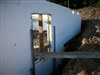
It looks like the windows are inoperable, which makes it easier to gain a low air infililtration rating |
|
|
|
|
jonr
Senior Member
Posts:5341
|
| 20 Oct 2012 02:28 PM |
|
I would trust a flexible tape more than spray foam injected into a crack. The latter (at least the CC ones I've seen) aren't going to seal if a 1/8" gap later increases to 1/4".
|
|
|
|
|
Lbear
Veteran Member
Posts:2740
|
| 20 Oct 2012 09:22 PM |
|
Posted By jonr on 20 Oct 2012 02:28 PM
I would trust a flexible tape more than spray foam injected into a crack. The latter (at least the CC ones I've seen) aren't going to seal if a 1/8" gap later increases to 1/4".
I wouldn't recommend spray foam either because as the window moves, the foam seal will eventually break. The better option would be a special foam gasket that moves as the windows move, then tape. |
|
|
|
|
Gary Olsen
New Member
Posts:42
|
| 22 Oct 2012 08:53 AM |
|
Air quality in a super insulated home is worse than the outside air, even in the big city. It may not lead to death while sleeping, but it could impact overall health, and conceal the causes of bodily reactions.
ASHRAE standards are being adapted by IRC for single family homes. Every room must have fresh air in. Air out is variable depending on which room and how many people occupy the room.
This is a change in the codes in my county. I will be interested to see how they perform the tests and if they are familiar with the new guidelines as I progress with my construction. |
|
|
|
|
jonr
Senior Member
Posts:5341
|
| 22 Oct 2012 09:24 AM |
|
I find it interesting that houses are tested for air flow from inside to outside, but not for airflow within the walls. For example, cold air could enter an outside crack near the bottom of a wall, flow up through the wall and exit near the top. Lots of heat lost, but this doesn't show up on a blower door test. I suggest interior and exterior air barriers.
|
|
|
|
|
ShakerPassiveHouse
New Member
Posts:5
|
| 22 Oct 2012 12:17 PM |
|
Generally, air quality is MUCH BETTER in a Passive House than in a comparable house because it constantly BREATHES in fresh filtered air and EXHAUSTS stale air (Zehnder ComfoAir HRV). If the power goes out? There have been thousands of Passive Houses in Europe for many years and oxygen is not an issue. We OPEN doors and windows all day long (most are fully operable). And one calculation shows that it would take nearly a month for one person at rest to use up enough oxygen to reduce it below acceptable levels if locked in an airtight enclosure of the size of a typical house. See http://members.shaw.ca/tfrisen/how_much_oxygen_for_a_person.htm. |
|
|
|
|
Gary Olsen
New Member
Posts:42
|
| 30 Oct 2012 09:22 AM |
|
ShakerPassiveHouse wrote: "Generally, air quality is MUCH BETTER in a Passive House than in a comparable house because it constantly BREATHES in fresh filtered air and EXHAUSTS stale air (Zehnder ComfoAir HRV)."
An HRV is the key here. Not only does a superinsulated house require the HRV, but ACH's vary by room. Hence, several HRV's may be needed to meet the new standards.
I spoke with my engineer regarding the county zoning board and the new regulations in IRC 2012. He said they were not even up on 2009 regs yet and would probably not even know about or check for compliance to 2012 regs. Hmmmm!?
CO2 is extremely dangerous. As an exterminator, it was the easiest and quickest way to exterminate a raccoon, or skunk. A CO2 cartridge, a trash can with a lid, and 2 minutes was all it took. I have heard of pot growers who use CO2 in their growhouses. Some have died due to lack of careful use of the CO2. |
|
|
|
|