If your family showers rather than taking tub-baths you'll do just fine with a 50 gallon heat pump water heater and a
drainwater heat recovery heat exchanger rated better than 50% in the standard
NRCAN testing. Currently the only DWHR vendor on the
MA approved plumbing fixtures list is Renewabilty ( PowerPipe series) others would require a variance. You can open an account with EFI with a credit card over the phone to get the wholesale price on them (which is better than the
direct-from manufacturer retail price, or
the orange box store retail price.)
From a showering point of view, a 4" x 48" or 3" x 60" (or bigger)
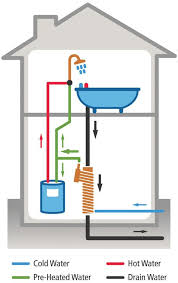
PowerPipe effectively doubles the apparent capacity of the tank, but
does nothing for tub-fills. (The drain and the water have to run
simultaneously to get the benefit. The heat exchanger needs to feed
both the hot & cold sides of the shower.) If 2 or more people insist
on always taking tubbies, bump it up in size, since the recovery is
slow. The DWHR unit needs to be mounted vertically to work, since it
relies on surface tension of the drain water to get it to spread out
over a maximal area for efficient heat exchange.
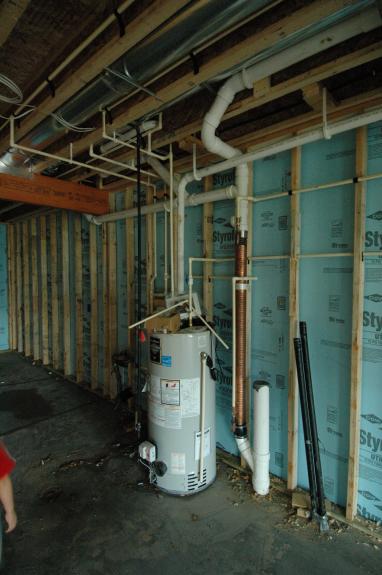
On bigger heat pump water heaters, the 66 gallon Airgenerate
AirTap ATI-66 tops the list- with all- stainless design you should be able to get at least 25 years out of it. For the really big 'uns the Stiebel Eltron
Accellera 300 has more than enough capacity, but not the stainless construction- it won't last nearly as long.
For the lower cost 50 gallon units the
GE GeoSpring does pretty well, (after some early-years nightmares) now that production has been set up in the US (Kentucky, IIRC) rather than offshore sources, with harder-to-monitor & fix quality control issues. The
ATI-50 would likely last 2x as long, but it's about 2x the price too.
The complexity & cost of buffering the desuperheater on a 2-ton has pretty limited value compared to drainwater heat recovery and heat pump water heaters. If history is any guide you would probably get better payback out of putting the money into rooftop PV than further investment on desuperheater & buffer tanks on your system.