drip

New Member

Posts:26
 |
| 29 Dec 2013 02:24 PM |
|
Hello, I am a first time poster, but long time reader of the form and I am looking for some input/advice on my new home design. I am building a new home in southern Ontario and I am trying to be as energy efficient as economically possible. I have decided to build an ICF basement with a 2x6 well insulated main floor. The main floor will then have an exterior foam layer bridge layer to prevent thermal bridging, whether I spray foam this or lay an inch or two of ridged foam has not been decided yet. I will have high cathedral ceilings throughout the home with an 8/12 internal slope and 12/12 exterior slope, which is the more reason to be efficient. I plan on heating with gas using an infloor radiant heating system, both in the concrete basement then on the main floor. I would like to eliminate the use of a supplemental heating unit, but it seems that I may have to from what I have been told, although I will need to run an AC unit either way. I have been investigating mini ductless units and that may seem like an option as of now. I am now trying to tweak the design of the home to implement a passive solar design to help with efficiency and was hoping some could provide some input. I understand the following:
• East- and west-facing glass should have a low SHGC (less than 0.40). • South-facing glass should have a high SHGC if the house has a proper
overhang. If it doesn't, you'll need a low SHGC glass, but then you won't
have a solar house because you're rejecting the solar gain.
I have a large covered porch coming off my main living area, but will I need something over the other windows? • The SHGC makes little difference on the north facade. Because most windows
get low U-values by adding low-e coatings, it comes at a price Any other suggestions from people will be greatly appreciated as I know many of you on here have a wealth of knowledge and experience that I could learn from.  Above pictured is my rough house location relative to the road and North. |
|
|
|
|
|
|
jonr

Senior Member
Posts:5341
|
| 29 Dec 2013 02:35 PM |
|
It's not possible to orient the house to face due south? That would have more gain in the winter and less in the summer. |
|
|
|
|
drip
New Member
Posts:26
|
| 29 Dec 2013 02:39 PM |
|
Basement

Front/South Facing
Garage/West

Main Layout
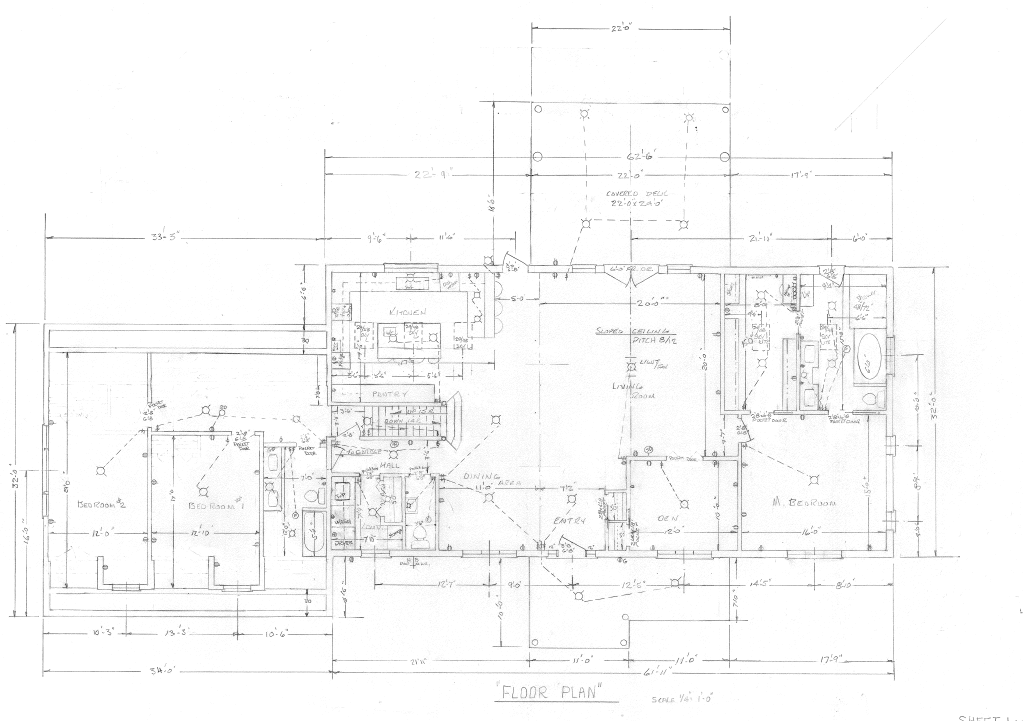
Rear/North Facing
Master BD- East

Roof Layout
 |
|
|
|
|
drip
New Member
Posts:26
|
| 29 Dec 2013 02:47 PM |
|
No I wish that was the case, but road access limits me here, I have farm land all around the lot.
|
|
|
|
|
jonr
Senior Member
Posts:5341
|
| 29 Dec 2013 02:48 PM |
|
You might look into taped Zip sheathing for a better air seal than house wrap. Plus gaskets where called for. There will be foam in the basement floor? |
|
|
|
|
drip
New Member
Posts:26
|
| 29 Dec 2013 03:15 PM |
|
Basement will be ICF, so yes foam, but I do not plan on doing any additional insulating there.
I was hoping to go with the spray foam on the exterior as that will act as my housewrap, but that may be too expensive.
|
|
|
|
|
ICFHybrid

Veteran Member
Posts:3039
|
| 29 Dec 2013 09:45 PM |
|
I plan on heating with gas using an infloor radiant heating system, both in the concrete basement then on the main floor. I would like to eliminate the use of a supplemental heating unit, Why would you need a supplemental heating unit if you are heating with gas? Is AC really necessary there? |
|
|
|
|
drip
New Member
Posts:26
|
| 29 Dec 2013 09:52 PM |
|
It will be radiant heat power by gas, but with the radiant heat I have been advised to have a supplemental unit to help it. Which would mean a forced air unit.
Yes, ac is a must it will run not stop here for a min. of 2-3 months as it gets very humid.
|
|
|
|
|
drip
New Member
Posts:26
|
| 29 Dec 2013 09:56 PM |
|
Maybe you could specify, I was hoping that between the radiant heating system and if I incorporate some solar heat that I could get away without the heating system, what are others feelings on this?
I am located in southern, Ont. so I am definitely heating more than cooling, I know the reaction time of the radiant heat is slower, but if it is consistently on would I need a supplemental system? The point is almost non existent if I need AC anyways as the duct or ductless system needs to be ran for the AC.
|
|
|
|
|
drip
New Member
Posts:26
|
| 29 Dec 2013 11:56 PM |
|
To aid in the passive solar design should I perhaps add a large window in the front porch section that is facing North? The rooms above the loft will gain heat from the front windows, as well as the front rooms, but the two main rooms that I would be looking to get heated (kitchen and living rooms) are both located near the rear of the home with Southern windows. |
|
|
|
|
Bob I
Veteran Member
Posts:1435
|
| 30 Dec 2013 09:00 AM |
|
couple of quick notes: a) drawing 6, left section there is a huge thermal leak at the wall/roof intersection. b)you need to insulate under the slab and isolate that slab from any concrete. c)use raised heel trusses so you can get the maximum insulation at the outside of the roof. This will greatly help reduce ice dams. |
|
| Bob Irving<br>RH Irving Homebuilders<br>Certified Passive House Consultant |
|
|
ICFHybrid
Veteran Member
Posts:3039
|
| 30 Dec 2013 10:07 AM |
|
No I wish that was the case, but road access limits me here, I have farm land all around the lot. If you are referring to orientation, being surrounded by farmland is usually a good thing for passive solar. Is there something that limits your ability to orient the home properly? |
|
|
|
|
ICFHybrid
Veteran Member
Posts:3039
|
| 30 Dec 2013 10:09 AM |
|
if I incorporate some solar heat that I could get away without the heating system, Something is not making sense here. A radiant heating system fired by gas should not require any supplementation. |
|
|
|
|
drip
New Member
Posts:26
|
| 30 Dec 2013 01:05 PM |
|
Posted By Bob I on 30 Dec 2013 09:00 AM
couple of quick notes: a) drawing 6, left section there is a huge thermal leak at the wall/roof intersection. b)you need to insulate under the slab and isolate that slab from any concrete. c)use raised heel trusses so you can get the maximum insulation at the outside of the roof. This will greatly help reduce ice dams.
Thank you Bob, a- How is the thermal leak at the wall/roof intersection resolved? Is this a spray foam job? b- Yes, I plan on insulating under the slab, especially with the radiant heat it will be absolutely necessary, what is normally done about the footings as if it is done as one pour as desired I will lose heat in the footings. c- thank you for the insight about the raised heel trusses |
|
|
|
|
drip
New Member
Posts:26
|
| 30 Dec 2013 01:08 PM |
|
Posted By ICFHybrid on 30 Dec 2013 10:07 AM
No I wish that was the case, but road access limits me here, I have farm land all around the lot. If you are referring to orientation, being surrounded by farmland is usually a good thing for passive solar. Is there something that limits your ability to orient the home properly?
If I understand correctly the house needs to be rotated 180 to maximize the solar heating gains (big large windows facing south for the living room and kitchen). Road access is only available from the south side, so the front of the house has to face the road, I need to have the living room and kitchen facing the backyard for the kids as it is a priority to be able to view the kids playing over anything else, do you see any other options? |
|
|
|
|
drip
New Member
Posts:26
|
| 30 Dec 2013 01:10 PM |
|
Posted By ICFHybrid on 30 Dec 2013 10:09 AM
if I incorporate some solar heat that I could get away without the heating system, Something is not making sense here. A radiant heating system fired by gas should not require any supplementation.
This was my thoughts also, but from heating and cooling guys they are telling me I should have a supplemental system also, but I may get away without it. I need AC so I could also install the ac and buy the heating unit afterwards if needed. |
|
|
|
|
Dana1
Senior Member
Posts:6991
|
| 30 Dec 2013 04:52 PM |
|
Posted By drip on 30 Dec 2013 01:05 PM
Posted By Bob I on 30 Dec 2013 09:00 AM
couple of quick notes: a) drawing 6, left section there is a huge thermal leak at the wall/roof intersection. b)you need to insulate under the slab and isolate that slab from any concrete. c)use raised heel trusses so you can get the maximum insulation at the outside of the roof. This will greatly help reduce ice dams.
Thank you Bob,
a- How is the thermal leak at the wall/roof intersection resolved? Is this a spray foam job?
b- Yes, I plan on insulating under the slab, especially with the radiant heat it will be absolutely necessary, what is normally done about the footings as if it is done as one pour as desired I will lose heat in the footings.
c- thank you for the insight about the raised heel trusses
The issue with the roof/wall intersection is that the insulation of the attic doesn't extend to the exterior edge of the wall insulation, so you have a stripe of R-0 where they meet. An energy heel truss would/should put full depth attic insulation right out over the top plate of the wall. On the kneewalled section there is an even bigger gap at the cathedralized ceiling, and a potential thermal bypass under the kneewall itself for air to flow freely. Needs some better detailing. It might be easier to go with an unvented roof in that part using a combination of rigid polyiso or EPS above the roof deck (to the IRC recommended minimum for dew point protection in your climate zone) with the rest of the R as fiber under the roof deck. With the slab as a radiator you need at a bare minimum R10 of sub-slab foam in any climate. As a general rule, add R5-R8 to the recommended value for your climate zone found in the right column of Table-2, p10 of this document. Use EPS, not XPS, and not polyiso. Poliso can take on ground moisture and lose effectiveness, XPS is blown with a high global-warming HFC (HFC134a), most of which leaks out over the first 50 years, at which point the R/inch is about the same as EPS. EPS is blown with pentane which has 1/200 the global warming potential of HFC134a, and most has already dissipated by the time it hits the distributor's lot, and it's R value in 50 years will be pretty much what it is on day-1. Type-II EPS has adequate pressure capacity for use under slabs, but the somewhat denser Type-IX is preferred by some radiant installers, since you can staple the tubing to the EPS with more reliable retention. Type IX EPS has the same compressive strength of most XPS products, and is less expensive per unit-R. Under the footings you have to let the engineers do the math on the footing width and compressive load of the house bearing on it, but you can usually get there with Type-X EPS. |
|
|
|
|
ICFHybrid
Veteran Member
Posts:3039
|
| 30 Dec 2013 07:10 PM |
|
I need AC so I could also install the ac and buy the heating unit afterwards if needed. You can have AC with a standard ducted forced air system or you can have it with a distributed system of ductless mini-split heat pumps, but if you want AC with radiant, it essentially forces you to have two completely separate systems to begin with and you mentioned that you thought you would have to have yet another supplemental heating system? Who is telling you this? |
|
|
|
|
ICFHybrid
Veteran Member
Posts:3039
|
| 30 Dec 2013 07:35 PM |
|
do you see any other options? Not at first glance. This does not appear to be a passive solar in any way. You have the largest windows not only facing North, but also exposed to the summer setting sun. Very small windows on the South and set in the middle of the wall with tiny overhangs so you get no help there between summer and winter. Did I mention the north-facing skylights? At this point, you'd be much better off insulating very well and reducing the openings as they are all in the wrong places. What is behind your desire for radiant, again? |
|
|
|
|
agagent3

Basic Member
Posts:134
|
| 31 Dec 2013 12:55 PM |
|
The number one rule for passive solar is orientation, that means glass facing South. As far as watching the kids, we raised three very active boys and they do grow up fast. I would not compromise a good design based on watching the kids. I agree with the comment concerning backup heat with a gas fired radiant system. Add the mini-split for cooling and supplemental heat. |
|
|
|
|