|
|
|
Sizing wood stove in ICF home
Last Post 15 Dec 2012 10:44 AM by jonr. 39 Replies. |
Sort:
|
|
 Prev Next Prev Next |
You are not authorized to post a reply. |
|
onesojourner

New Member

Posts:30
 |
| 07 Dec 2012 11:10 AM |
|
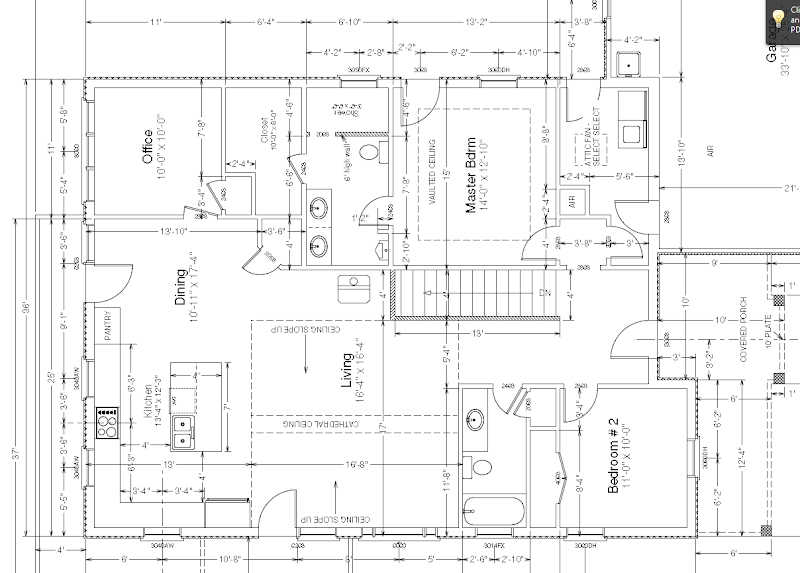
I have made some pretty good progress on our house and I am starting to look into the size of the woodstove. The house is in southwest MO. That is zone 6b if that matters. This is a TF Systems house at about 1620 sq ft up and about the same in the walk out basement. We will use the wood stove as our main heat source. There will be 2 return airs on the peak of the cathedral ceiling in the living area to help circulate the heat. Right now I am looking at the Jotul f400 castine. It is rated to heat 1600 sq ft, what ever that means. I am also considering the jotul f3. I am having a hard time finding examples of wood stoves in ICF homes. I am worried about over sizing the stove and not burning it efficiently.

 |
|
| http://icftfsystemshome.blogspot.com/ |
|
|
|
|
BrianBaron
New Member
Posts:76
|
| 07 Dec 2012 12:48 PM |
|
I think one of the main reasons you are having trouble finding examples if wood stoves in ICF homes is the air tightness and lack of 'make up air' causes issues with exhausting and efficiency.
Never looked into it myself, just an educated guess / opinion. |
|
|
|
|
Dana1

Senior Member
Posts:6991
|
| 07 Dec 2012 01:23 PM |
|
Heat load is never a function of the square footage floor area of the conditioned space. It's all about exterior surface area and the U-factors of different assembly/sub-assembly types. As a rough cut on the U-factor of your walls, add up the combined inner & outer foam thickness in inches and multiply x4 , and add 2, and invert it. eg:
You have 2.5" of EPS on each side of the wall for a total of 5", thats ( 5" x R4/inch) + R2 (concrete & siding, etc), for a total of R22, and a U-factor of about 1/R22= 0.045 BTU per square foot per degree-F difference.
Look up your 99% design condition (or guesstimate): http://www.energystar.gov/ia/partners/bldrs_lenders_raters/downloads/Outdoor_Design_Conditions_508.pdf
Then assume you're running 70F interior, calculate the difference between the outside design temp and the inteiror temp, and multiply by the square feet and U-factors, and add it all up. eg:
Say you have 100 square feet of U0.28 window, and a outside design temp of -10F for an 80F delta-T. The window losses at design temp are:
100 x 0.28 x 80= 2240BTU/hr
Assuming you have about 2000- square feet of above grade exterior wall (after you've subracted out windows & doors), with a U-factor of 0.045 you get
2000 x 0.045 x 80F= 7200BTU/hr
Assuming 1620' of R50 attic, that's a U-factor of about (1/50= )0.02, so the ceiling losses are
1620 x 0.02 x 80F = 2592 BTU/hr
If you know the U-factor for your doors, etc, add that in too, but for this example we'll ignore it. The heat load at design condition is about
2240 + 7200 + 2592= ~12000BTU/hr.
Give yourself a 15-25% fudge-factor for sub-grade losses and air leakage etc, call it 15000BTU/hr.
I'll leave it to YOU to do the real numbers- it's your house, but that approach is a good enough heat load calc for sizing a woodstove.
Then look at the max-fire BTU ratings of the stoves. Anything much bigger than 2x your heat load number is going to be too big to fire at a rate high enough for a non-catalytic EPA rated stove to hit secondary-firing temp at which the emissions were rated without turning the place into a sauna. Most can coast along pretty well at about half the max output efficiently, some can drop to about 1/3 of max-fire and still burn cleanly.
The Jøtul F 400 Castine is rated 55,000BTU/hr max, and I doubt it'll burn that cleanly much below 20K, so if your numbers are anything like the above crude heat load calc you'll probably end up cooking yourself or polluting the neighborhood.
In a tightly detailed ICF house it's also important to use only sealed-combustion appliances that ducts in the combustion air from the outdoors directly to the woodstove so that it drafts freely without signficant backdraft potential. There's a kit for that available for the Castine, but not all of the smaller Jøtuls have that feature. (The classic 28,000 BTU Jøtul F 602 does not, and I don't think the J3 does either). If you're going to oversize the stove it's better to go with a ceramic of soapstone stove with it's own inherent moderating thermal mass. That way you can build small hot clean burning fires and let the mass of the stove moderate the output. They're more expensive than steel & cast iron stoves, but it's worth it on comfort grounds if you're heating a house with a sub-20,000BTU heat load at the 99% design condition with a 55000BTU stove.
The downside to the higher-mass stoves is that it takes time to come up temp when coming into a cold house due to the thermal lag of the stove's mass, but the upside is it'll coast along for hours on the stored heat in the stone or ceramic after the fire went out. Hearthstone has a few lower-output soapstone & steel stoves with efficiencies north of 80% with outdoor combustion air kits available that might work for you, but there are others out there as well.
But to get satisfactory comfort & performance out of ANY heating appliance, it all starts with a reasonable heat load calculation, not some "BTU per square foot" type of rule of thumb. And that's 2x as important with higher- R/lower-U than code-min wall assemblies like ICFs. The mass effect of the concrete also lowers the true peak loads, but that's not such a big issue when sizing a woodstove. If you can get the max rating under 2x the down & dirty heat load calc outlined you'll be OK, but for very low load homes the selections get a lot smaller. I like the output specs on the Hearthstone Bari & Tula for smaller heat loads, but the Euro-look doesn't always work for people. Morsø has some decent low-output stoves too, but like the smallest Jøtuls piped-in combustion air isn't always an option.
|
|
|
|
|
jonr
Senior Member
Posts:5341
|
| 07 Dec 2012 07:35 PM |
|
Consider avoiding most of the rate issues by using a hydronic wood boiler + a water tank. About 1/3 the space of masonry (I think I did that right) and you can control the heat flow to get a nice steady indoor temperature. |
|
|
|
|
ICFHybrid

Veteran Member
Posts:3039
|
| 07 Dec 2012 08:07 PM |
|
I have a Quadrafire 7100 in an ICF home. It's rated at about 60kBTU or so. Was just firing it today. It works great. It is an EPA sealed unit which means it uses outside combustion air, so you have to do an additional vent for it, but it was just a little planning, no big deal. Because it is sealed, the fire level is nicely controllable. This unit has the option to takeoff up to two ducts to supply heat to remote locations. They are just duct connections off the plenum that moves heated air around the box. There is also an option to draw (un)heated air from another location in the house or even, I guess, from outside, but can't understand why someone would do that. There is a snap switch under the fire box which prevents the blowers from coming on and moving air until the plenum is hot enough. It takes about 40 minutes to come on after a fire is started. There is a faceplate surround for the stove and the installer noted that some people remove the wire screen on the grille openings to keep the air volume up. I have been using it entirely without the surround and the volume of air moved seems surprisingly small, but I am sure it is engineered. At max fire, the air exiting the plenum is about 160F. The remote heat option requires an inline duct fan at the remote location to pull the heated air from the stove plenum. You can operate the remote location on a thermostat which will stop the fan if your remote area gets too hot, but you need to run a line from the snap switch if you want to prevent cold air from being delivered if there is no heat in the box. |
|
|
|
|
sailawayrb
Veteran Member
Posts:2283

|
| 07 Dec 2012 09:12 PM |
|
What Dana said, except you can use Heat Loss calculator on our DIY calculator website to avoid the math: DIY Calculators You can also use the Masonry Heater calculator on our DIY calculator website to determine BTU/H heat gain of a wood stove as a function of the amount of wood you burn/day. You will need to pipe in the required combustion air which is typically required by code. Wood stoves and energy efficient houses are not compatable as Dana mentioned and as described in the masonry heater section of the calculator instructions on our DIY calculator website and also repeated here: Energy efficient homes may only require 3,000 to 8,000 British Thermal Units (BTU) of heat gain per hour. For most conventional woodstoves, this is well below their critical burn rate for operating cleanly and they will start to smolder. If you operate most conventional woodstoves at or above their critical burn rate, you may easily overheat an energy efficient home. The only solution for this dilemma is to have many small firings, which is not very convenient. Therefore, wood burning and energy efficient homes are not normally compatible unless you have some way to burn the wood at or above the critical burn rate to allow operating cleanly and you have a way to store the excess heat that is created and release it as needed without having to accomplish frequent, inconvenient firings. Masonry heaters provide the solution to this problem and have actually been the most efficient way to heat a home with wood for over a hundred years. Unlike fireplaces or woodstoves, there is very little heat loss because the exhaust gases are circulated through the masonry heater several times before going up the chimney. There is very little pollution because masonry heaters burn the wood very quickly and operate at about 1700 degrees so as to fully burn what even certified woodstoves cannot burn. Masonry heaters store and slowly release radiant heat over a 24 hour period accomplished by only one or two firings per day. Masonry heater surfaces never get extremely hot like stoves and do not overheat and excessively dehumidify your home which your sinuses will greatly appreciate. A masonry heater can also be located to absorb solar radiation and store this form of heat energy too. Therefore, masonry heaters are similar and compatible with hydronic radiant floor heating and passive solar heating. As a side benefit, you can have a nice masonry oven that is available for energy free baking duties perhaps 10 hours per day and you can also have heated benches for you, your guests, and your pets to enjoy all day. Constructing a masonry heater is a relatively simple DIY project and there are many good kits available in the marketplace to do this. Please be sure to fully research and comply with all your local building code requirements. |
|
| Borst Engineering & Construction LLC - Competence, Integrity and Professionalism are integral to all that we do! |
|
|
jdebree

Basic Member
Posts:497
|
| 08 Dec 2012 07:12 AM |
|
This is going to be a challenge for us, too. We're building 1250 sq ft in upstate SC, which is even milder than MO. I expect our woodstove will mostly be for aesthetics. Too bad; I have an unlimited supply of wood to burn. |
|
|
|
|
toddm
Veteran Member
Posts:1152
|
| 08 Dec 2012 08:57 AM |
|
http://www.ebay.com/itm/NEW-Indoor-wood-stove-GASIFICATION-BOILER-with-top-cooking-plate-/170853364027?pt=LH_DefaultDomain_0&hash=item27c7a7713b
51kbtu/hr output, but only 15kbtu/hr to the room. And your neighbors will line up at the door to watch your stove burn. |
|
|
|
|
jdebree
Basic Member
Posts:497
|
| 08 Dec 2012 12:14 PM |
|
That's cool, but a little spendy. Now, if I could get those neighbors that are lined up to help pay for it..... |
|
|
|
|
David Moore
New Member
Posts:4
|
| 08 Dec 2012 01:22 PM |
|
I agree with "sailaway", but without doing a lot of math, the low tech approach of a masonry heater just feels right for heating an ICF structure. A heavy thermal mass battery gets charged up quickly then quietly, gently, and slowly releases the stored energy as radiant heat.
The best available source for information about them ( for the US market ) can be found at the website for the " Masonry Heater Association of North America ". ( http://www.mha-net.org/ )
This is just my personal opinion and I have no math or any desire to do the math, to back it up, but the thermal mass of a masonry heater can also help to cool the living spaces around it. In the summer months, I simply open the firebox combustion air intake damper, which comes from the basement, and allow the cool air to vent through the masonry heat exchange channels which are now cool air exchange channels. |
|
|
|
|
Lbear
Veteran Member
Posts:2740

|
| 08 Dec 2012 03:20 PM |
|
DOE states that wood burning stoves & fireplaces are highly inefficient and contribute a lot to particulate pollution: EPA StudyEnergy.GovAlthough they do make more efficient models today, overall they are not recommended, especially in a tight ICF home. |
|
|
|
|
toddm
Veteran Member
Posts:1152
|
| 08 Dec 2012 05:00 PM |
|
the gasiifier I linked above is 90 percent efficient. Doesn't even smell like wood smoke. Most modern stoves are 70 percent efficient or better, which is not "highly inefficient" in my book. While particulates can be a local issue, wood is renewable energy -- biomass -- and carbon neutral because decomposition is roughly the same result. Finally, with an outside air supply, it doesn't matter how tight the house is.
|
|
|
|
|
sailawayrb
Veteran Member
Posts:2283
|
| 08 Dec 2012 05:03 PM |
|
In most states, you can not legally install a new woodstove unless it is certified to be clean burning by the EPA. Masonry heaters are even more cleaning burning than certified woodstoves and they typically run in the low to mid 90s in terms of efficiency. I would characterize masonry heaters as being a great way to efficiently utilize a renewable fuel resource and to also provide heat to an energy efficient building. However, masonry heaters can be pretty pricey if you have to hire someone to build you one. |
|
| Borst Engineering & Construction LLC - Competence, Integrity and Professionalism are integral to all that we do! |
|
|
ICFHybrid
Veteran Member
Posts:3039
|
| 08 Dec 2012 11:16 PM |
|
Although they do make more efficient models today, overall they are not recommended, especially in a tight ICF home. I read the articles but didn't see the part where wood burning stoves aren't recommended for a tight home like ICF. My wood burner is a perfect match for my ICF home, which is mighty tight. Filling the firebox three times a day keeps it nice and toasty inside. Too warm to work, actually, so we keep it to a couple fillings. |
|
|
|
|
Lbear
Veteran Member
Posts:2740
|
| 09 Dec 2012 02:43 AM |
|
Posted By ICFHybrid on 08 Dec 2012 11:16 PM
Although they do make more efficient models today, overall they are not recommended, especially in a tight ICF home. I read the articles but didn't see the part where wood burning stoves aren't recommended for a tight home like ICF. My wood burner is a perfect match for my ICF home, which is mighty tight. Filling the firebox three times a day keeps it nice and toasty inside. Too warm to work, actually, so we keep it to a couple fillings.
An EPA approved modern wood stove generally needs to be supplied between 5 - 25 cfm to burn properly. That is interior air that is being utilized. If your ERV/HRV malfunctions and stops working, you are depleting your oxygen supply by the wood stove, you can have some serious problems on your hand. and I quote: " Field trials conducted by the Combustion and Carbonization
Research Laboratory (CCRL) of fireplaces in Canadian homes, in
conjunction with other combustion equipment, have shown that in all but
one case, on cold winter days, use of conventional masonry fireplaces
actually resulted in an increase in fossil-fuel consumption for heating.
The fireplaces actually had a negative energy efficiency during the
tests.
If a fireplace does not have its own dedicated outside air supply and is
not perfectly sealed from the house, under high excess-air conditions,
it will take up to 1.4 air changes per hour (ACH) of heated house air
and exhaust it up the chimney"
Home Energy Magazine
|
|
|
|
|
ICFHybrid
Veteran Member
Posts:3039
|
| 09 Dec 2012 08:42 AM |
|
Of course. You are talking about non-sealed units. Who, in their right mind would put in an unsealed stove or fireplace without a combustion air supply?
The proper stoves and fireplaces have completely separate combustion systems. The fire essentially takes place using outside air and exhausts combustion products to the outside while warming the plenum. Interior air is circulated through the plenum, warmed and returned to the home. They are completely separate systems. |
|
|
|
|
jonr
Senior Member
Posts:5341
|
| 09 Dec 2012 09:07 AM |
|
I see this model repeated over and over - system A (implemented poorly) is compared to system B (implemented well) and then some organization writes an article about how system A is flawed and system B is superior. Most people don't spot the problem with the test. |
|
|
|
|
onesojourner
New Member
Posts:30
|
| 09 Dec 2012 10:04 AM |
|
Posted By Dana1 on 07 Dec 2012 01:23 PM
Heat load is never a function of the square footage floor area of the conditioned space. It's all about exterior surface area and the U-factors of different assembly/sub-assembly types. As a rough cut on the U-factor of your walls, add up the combined inner & outer foam thickness in inches and multiply x4 , and add 2, and invert it. eg:
You have 2.5" of EPS on each side of the wall for a total of 5", thats ( 5" x R4/inch) + R2 (concrete & siding, etc), for a total of R22, and a U-factor of about 1/R22= 0.045 BTU per square foot per degree-F difference.
Look up your 99% design condition (or guesstimate): http://www.energystar.gov/ia/partners/bldrs_lenders_raters/downloads/Outdoor_Design_Conditions_508.pdf
Then assume you're running 70F interior, calculate the difference between the outside design temp and the inteiror temp, and multiply by the square feet and U-factors, and add it all up. eg:
Say you have 100 square feet of U0.28 window, and a outside design temp of -10F for an 80F delta-T. The window losses at design temp are:
100 x 0.28 x 80= 2240BTU/hr
Assuming you have about 2000- square feet of above grade exterior wall (after you've subracted out windows & doors), with a U-factor of 0.045 you get
2000 x 0.045 x 80F= 7200BTU/hr
Assuming 1620' of R50 attic, that's a U-factor of about (1/50= )0.02, so the ceiling losses are
1620 x 0.02 x 80F = 2592 BTU/hr
If you know the U-factor for your doors, etc, add that in too, but for this example we'll ignore it. The heat load at design condition is about
2240 + 7200 + 2592= ~12000BTU/hr.
Give yourself a 15-25% fudge-factor for sub-grade losses and air leakage etc, call it 15000BTU/hr.
I'll leave it to YOU to do the real numbers- it's your house, but that approach is a good enough heat load calc for sizing a woodstove.
Then look at the max-fire BTU ratings of the stoves. Anything much bigger than 2x your heat load number is going to be too big to fire at a rate high enough for a non-catalytic EPA rated stove to hit secondary-firing temp at which the emissions were rated without turning the place into a sauna. Most can coast along pretty well at about half the max output efficiently, some can drop to about 1/3 of max-fire and still burn cleanly.
The Jøtul F 400 Castine is rated 55,000BTU/hr max, and I doubt it'll burn that cleanly much below 20K, so if your numbers are anything like the above crude heat load calc you'll probably end up cooking yourself or polluting the neighborhood.
In a tightly detailed ICF house it's also important to use only sealed-combustion appliances that ducts in the combustion air from the outdoors directly to the woodstove so that it drafts freely without signficant backdraft potential. There's a kit for that available for the Castine, but not all of the smaller Jøtuls have that feature. (The classic 28,000 BTU Jøtul F 602 does not, and I don't think the J3 does either). If you're going to oversize the stove it's better to go with a ceramic of soapstone stove with it's own inherent moderating thermal mass. That way you can build small hot clean burning fires and let the mass of the stove moderate the output. They're more expensive than steel & cast iron stoves, but it's worth it on comfort grounds if you're heating a house with a sub-20,000BTU heat load at the 99% design condition with a 55000BTU stove.
The downside to the higher-mass stoves is that it takes time to come up temp when coming into a cold house due to the thermal lag of the stove's mass, but the upside is it'll coast along for hours on the stored heat in the stone or ceramic after the fire went out. Hearthstone has a few lower-output soapstone & steel stoves with efficiencies north of 80% with outdoor combustion air kits available that might work for you, but there are others out there as well.
But to get satisfactory comfort & performance out of ANY heating appliance, it all starts with a reasonable heat load calculation, not some "BTU per square foot" type of rule of thumb. And that's 2x as important with higher- R/lower-U than code-min wall assemblies like ICFs. The mass effect of the concrete also lowers the true peak loads, but that's not such a big issue when sizing a woodstove. If you can get the max rating under 2x the down & dirty heat load calc outlined you'll be OK, but for very low load homes the selections get a lot smaller. I like the output specs on the Hearthstone Bari & Tula for smaller heat loads, but the Euro-look doesn't always work for people. Morsø has some decent low-output stoves too, but like the smallest Jøtuls piped-in combustion air isn't always an option.
Wow thanks for the reply. We have quite a few windows and doors. The total is about 285. Many of the doors are going to be full glass, but they will be low-e and argon also. Our windows are rated at u .24. I am coming up with 4788 there. The rafters will be spray foamed. I think that runs at about r6 per inch and they will guarantee at least 4-6 inches. So r-24 up there. the roof pitch is 6/12. I am not sure how that would figure into everything. I believe all of Jotuls classic line offer outside air kits excepts the 602, At least all the stoves I have looked at (f100 (currently own) F3 and f400). I put in a 4 inch pvc sleeve before the pour so there is a straight shot through the floor joists for the outside air line. ICFhybrid could you give me some more info on your house? size, location roof insulation ect? |
|
| http://icftfsystemshome.blogspot.com/ |
|
|
ICFHybrid
Veteran Member
Posts:3039
|
| 09 Dec 2012 12:49 PM |
|
We currently have 6000 sf in Western Washington, climate zone 4c (marine). It is basement + 2 stories with the lower 2 levels 6" ICF and the upper 2X6 stick framed. The roof is all 2 X 12 unvented with 2" of closed cell spray foam followed by a fill with blown-in batt. IIRC, the volume is 78,000 cubic feet.
Engineering indicated heat loss of about 40kBTU with passive solar contributing about 30% of that over the year. We are currently heating it adequately with 2 X 9kBTU mini split units on the basement and main floors. They can hold a temp of 68F down to about freezing outside despite the fact that the envelope has numerous holes in it covered by plywood doors and/or plastic. Generally, we keep it a little cooler at 65F so you can work inside.
If it is particularly cold and drizzly outside, I will run the fireplace so there is something to warm adhesives and workers up with. It takes a partial firebox full of wood to get a hot burn with coals started and then 2 more boxes of wood to cover the workday. If we were living in it that would probably be 3 boxes of wood to cover an evening burn, too. When the fireplace runs, the temperature goes to 72F+ and the minisplits don't run.
When I bought this Quadrafire 7100, it was rated at 60-70kBTU, but I now see it is 58,500, which is probably more accurate. I am burning well-seasoned Douglas Fir which is unavoidably a little wet this time of year and would estimate I can get 40kBTU or so out of it without pushing. I did a couple burns with dry alder and maple and you could get more like rated output that way, I'm sure. When you burn it hot, if you listen carefully, you can actually hear the air being drawn through the combustion air vent system. That would be air getting sucked out of your home with unsealed fireplaces and stoves.
The heat seems to extend easily about 60' from the fireplace in an open floor plan without any mechanical circulation. If you were using the zone delivery option that some stoves have or had a ventilation system in operation it could obviously be farther. Without air movement assistance, it starts to get cold after you pass through the second door from the fireplace or so on days when the temp is at or below freezing. |
|
|
|
|
onesojourner
New Member
Posts:30
|
| 09 Dec 2012 01:36 PM |
|
Wow so you are in a colder zone and you have double the sq ft. with a similar output stove. I am thinking the f3 would be more reasonable. |
|
| http://icftfsystemshome.blogspot.com/ |
|
|
| You are not authorized to post a reply. |
|
Active Forums 4.1
 |
Membership: |
 |
Latest:
croccohvacusa |
 |
New Today:
0 |
 |
New Yesterday:
0 |
 |
Overall:
35027 |
 |
People Online: |
 |
Visitors:
423 |
 |
Members:
0 |
 |
Total:
423 |
|
|
|